
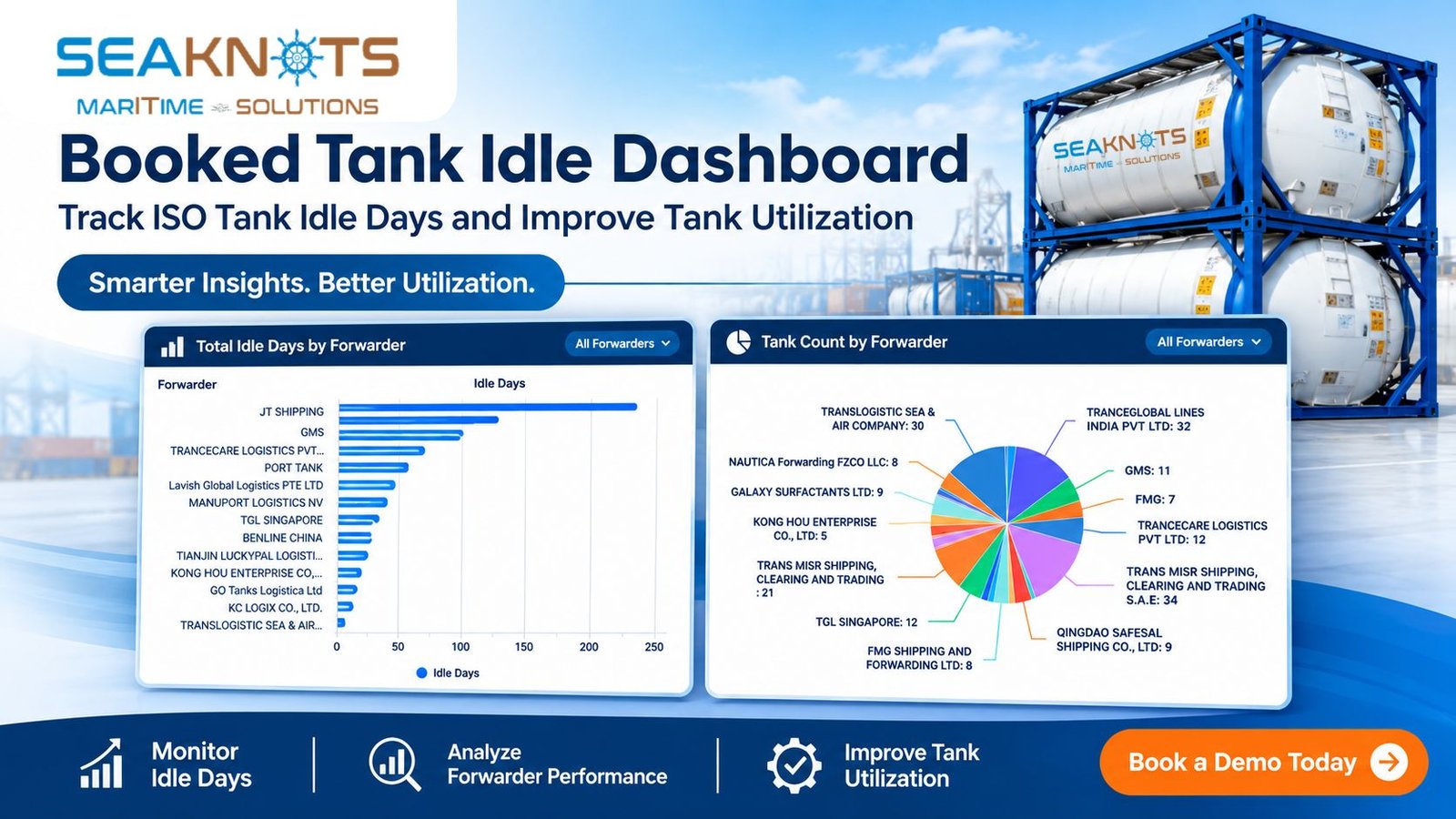
Booked Tank Idle Dashboard: How to Track ISO Tank Idle Days and Improve Tank Utilization
How efficiently are your booked ISO tanks being utilized? Are you able to identify how many days your tanks remain idle, which forwarders contribute to longer idle periods, and where operational improvements are needed?
For ISO tank operators, depot managers and tank management companies, monitoring idle days is essential for maintaining operational efficiency and maximizing asset utilization.
The Seaknots Booked Tank Idle Dashboard helps businesses gain better visibility into booked ISO tank idle days, monitor forwarder-wise performance and analyze tank utilization through a centralized analytics dashboard.
Instead of relying on manual reports and disconnected data, businesses can use meaningful operational insights to identify idle periods, monitor performance and make informed decisions.
What Is a Booked Tank Idle Dashboard?
A Booked Tank Idle Dashboard is an analytics and reporting tool that helps ISO tank operators monitor the idle duration of booked tanks and evaluate their utilization performance.
It provides a consolidated view of important operational metrics, including total booked tanks, grand total idle days, average idle days, forwarder-wise idle analysis and tank count by forwarder.
With the Seaknots dashboard, businesses can understand tank idle patterns, compare forwarder performance and identify opportunities to improve tank turnaround efficiency.
Why Is Monitoring ISO Tank Idle Days Important?
Idle ISO tanks can affect asset productivity, operational planning and overall business performance. When tanks remain unused or idle for extended periods, businesses may face challenges in managing availability, allocating resources and maintaining efficient tank movements.
Monitoring idle days helps businesses:
Identify tanks experiencing extended idle periods.
Understand forwarder-wise tank utilization.
Improve operational planning and tank allocation.
Monitor performance using measurable data.
Identify opportunities to reduce unnecessary idle time.
Improve overall ISO tank asset utilization.
Having access to centralized reporting makes it easier for operational teams to identify potential issues and take timely action.
Key Features of the Seaknots Booked Tank Idle Dashboard
The Seaknots Booked Tank Idle Dashboard provides essential metrics and interactive visual reports to simplify tank utilization monitoring.
1. Total Tanks Monitoring
Get an instant overview of the total number of booked ISO tanks under monitoring. This metric helps depot operators and tank management teams understand the volume of booked tanks being tracked.
2. Grand Total Idle Days
Monitor the cumulative idle days across all booked tanks. This helps businesses understand the overall idle duration and evaluate tank utilization performance.
3. Average Idle Days Analysis
Track the average idle days across booked tanks to identify delays and understand idle-time trends. This metric helps operational teams evaluate performance and identify areas that may require attention.
4. Forwarder-Wise Idle Analysis
Analyze total idle days across different forwarders through interactive bar charts. Compare forwarder-wise performance, identify higher idle durations and gain insights into tank utilization patterns.
5. Tank Count by Forwarder
Understand how booked tank volumes are distributed across different forwarders. The interactive pie chart provides a visual breakdown, helping businesses compare tank counts and understand forwarder-wise distribution.
How Does the Dashboard Help Improve ISO Tank Utilization?
Effective ISO tank utilization requires accurate operational data and continuous performance monitoring.
The Seaknots Booked Tank Idle Dashboard brings important metrics together, helping businesses:
Improve Operational Visibility: Monitor booked tanks and idle days from one centralized dashboard.
Identify Idle-Time Patterns: Understand cumulative and average idle days to identify potential utilization gaps.
Evaluate Forwarder Performance: Compare idle days and tank volumes across different forwarders.
Support Better Planning: Use operational insights to improve resource planning and tank allocation decisions.
Make Data-Driven Decisions: Convert operational reports into meaningful insights for better management decisions.
Who Can Benefit from a Booked Tank Idle Dashboard?
A booked tank idle dashboard can support different businesses involved in ISO tank operations, including:
ISO Tank Operators: Monitor booked tank performance and utilization.
Tank Leasing Companies: Gain visibility into tank usage and idle periods.
Depot Operators: Improve operational monitoring and tank management.
Tank Management Teams: Analyze idle-time trends and forwarder performance.
Logistics and Forwarding Companies: Understand forwarder-wise tank distribution and utilization patterns.
Why Choose Seaknots for ISO Tank Management?
Seaknots provides digital solutions designed to simplify and streamline ISO tank and container operations.
With centralized operational management, reporting capabilities and analytics features, Seaknots helps businesses improve visibility across their tank management processes.
The Booked Tank Idle Dashboard adds another layer of operational intelligence by making important tank utilization metrics easier to monitor and analyze.
Frequently Asked Questions (FAQs)
1. What is ISO tank idle time?
ISO tank idle time refers to the duration a tank remains unused or inactive during a defined operational period. Monitoring idle time helps businesses understand tank utilization and identify potential operational delays.
2. How do you calculate ISO tank idle days?
ISO tank idle days can generally be calculated by determining the number of days a tank remains idle between the relevant operational dates. The exact calculation depends on the business rules and tracking milestones used by the organization.
3. What is an ISO tank utilization dashboard?
An ISO tank utilization dashboard is a reporting solution that provides visibility into tank availability, usage, idle periods and other operational performance indicators.
4. How can businesses reduce ISO tank idle days?
Businesses can identify extended idle periods, monitor tank movements, improve operational coordination, evaluate forwarder performance and use data-driven reports to identify opportunities for improvement.
5. Why is forwarder-wise idle analysis important?
Forwarder-wise idle analysis helps businesses compare idle days across different forwarders, identify utilization patterns and understand where operational improvements may be required.
6. What are the benefits of using an ISO tank management dashboard?
An ISO tank management dashboard provides centralized reporting, improved operational visibility, performance monitoring, utilization insights and better support for operational decision-making.
7. Can the Seaknots dashboard track forwarder-wise tank performance?
Yes. The Seaknots Booked Tank Idle Dashboard provides forwarder-wise idle-day analysis and tank count distribution through interactive charts, helping businesses compare performance and monitor booked tank volumes.
Conclusion: Turn Tank Data into Operational Insights
Efficient ISO tank management is not just about tracking tank movements; it is also about understanding how effectively your assets are being utilized.
The Seaknots Booked Tank Idle Dashboard helps businesses monitor booked tank idle days, analyze forwarder-wise performance and gain better visibility into tank utilization.
Make informed decisions, identify idle-time patterns and improve operational efficiency with smarter ISO tank analytics.
Ready to gain better visibility into your ISO tank operations?
Explore Seaknots and discover smarter ways to manage ISO tanks and containers.