
Introduction
As global trade and containerized cargo continue to grow, businesses are under increasing pressure to move goods faster, reduce logistics costs, and improve supply chain visibility. This is where inland container depots play a vital role in modern logistics infrastructure.
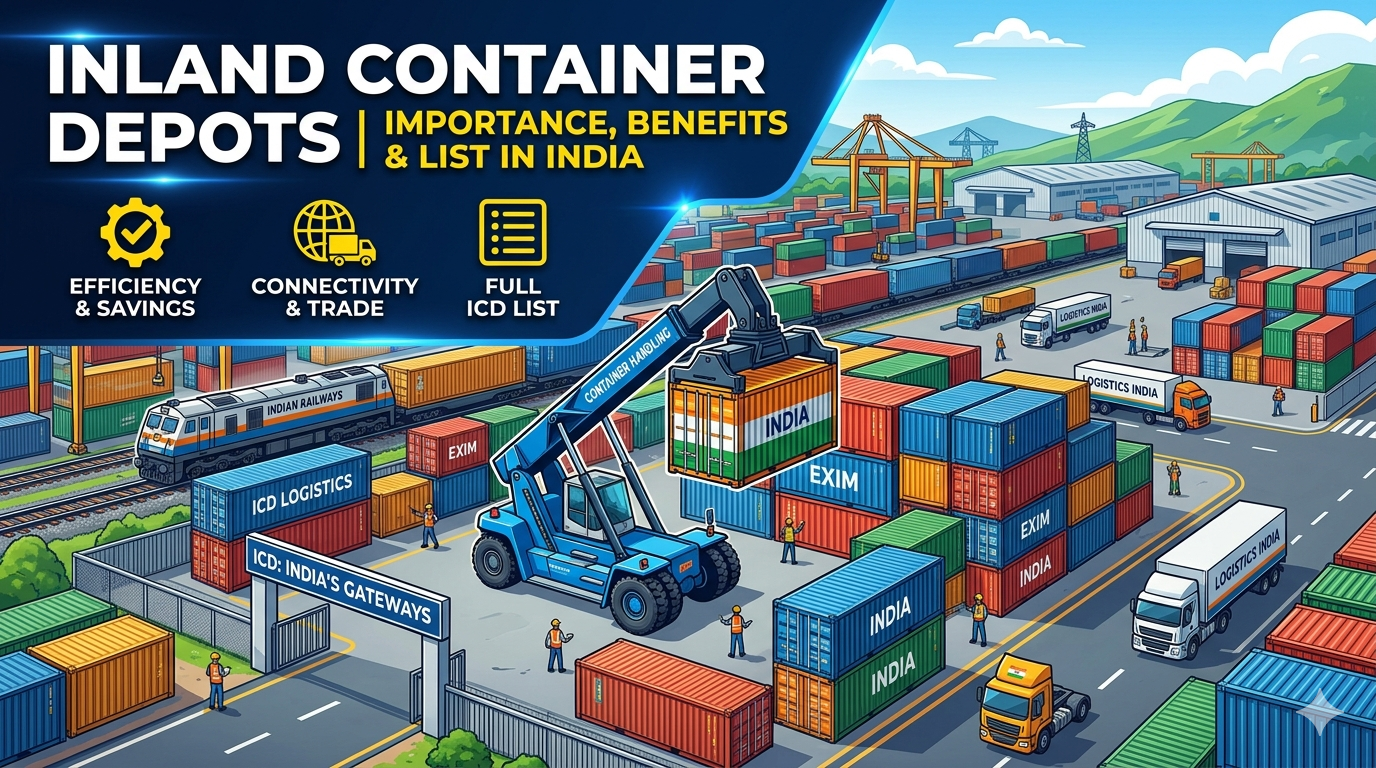
An Inland Container Depot (ICD), also known as a dry port, is a facility located away from seaports that handles container storage, customs clearance, cargo consolidation, and transportation services. These depots help reduce congestion at ports while improving cargo movement efficiency across the country.
For logistics companies, freight forwarders, shipping lines, and ISO tank operators, inland container depots have become essential for seamless cargo operations. With the rise of digital transformation, businesses are increasingly adopting advanced logistic management software, ISO tank management software, and tank depot software to optimize depot operations and gain real-time visibility.
What are Inland Container Depots?
Inland container depots are inland facilities connected to ports through rail, road, or multimodal transportation networks. They function as extensions of seaports and provide container handling and customs services closer to industrial and commercial hubs.
ICDs are designed to:
- Reduce port congestion
- Improve cargo handling efficiency
- Enable faster customs clearance
- Reduce transportation delays
- Optimize container movement
They serve both importers and exporters by simplifying cargo logistics and improving operational efficiency.
Explore More: Depot Operations with Seaknots MNR KPI Widgets
Why Inland Container Depots are Important in Logistics
- Reduced Port Congestion
Major seaports often experience heavy congestion, leading to delays and increased costs. Inland container depots help distribute cargo handling activities away from ports.
- Faster Cargo Movement
ICDs enable quicker loading, unloading, and customs processing, reducing transit time for businesses.
- Cost Optimization
By moving cargo handling inland, companies can lower storage charges, reduce detention costs, and improve route planning.
- Better Connectivity
Inland depots connect industrial zones with ports through rail and road networks, enabling smoother logistics operations.
- Improved Supply Chain Efficiency
With modern logistic management software, companies can automate workflows, track containers in real time, and manage operations efficiently.
Key Functions of Inland Container Depots
Container Storage
ICDs provide secure storage for empty and loaded containers before transportation.
Customs Clearance
Import and export cargo can be processed through customs at ICDs instead of busy seaports.
Cargo Consolidation
Multiple shipments can be combined for efficient transportation and reduced logistics costs.
Maintenance & Repairs
Container inspection, repair, and cleaning services are often available at inland depots.
Multimodal Transportation
ICDs facilitate transportation via rail, road, and sometimes waterways.
Benefits of Inland Container Depots
Enhanced Logistics Efficiency
Modern inland depots improve cargo turnaround time and operational productivity.
Real-Time Container Visibility
Advanced tank depot software and container tracking systems provide real-time shipment monitoring.
Reduced Transportation Costs
Strategic inland locations reduce unnecessary port handling and storage charges.
Better Asset Utilization
Efficient scheduling and tracking improve container and fleet utilization.
Improved Customer Satisfaction
Faster delivery timelines and accurate shipment tracking enhance customer experience.
Read More: Auto-Detect Container Number – The Future of Smart Depot Operations
Role of Logistic Management Software in Inland Container Depots
Technology has transformed depot operations significantly. Advanced logistic management software enables businesses to:
- Automate depot workflows
- Manage inventory and container movement
- Track shipments in real time
- Generate operational reports
- Improve billing and financial management
- Optimize transportation planning
Software solutions help depot operators reduce manual work and improve operational transparency.
Importance of ISO Tank Management Software for Liquid Logistics
For businesses handling liquid chemicals and hazardous cargo, specialized ISO tank management software is essential.
It helps companies:
- Track ISO tanks globally
- Monitor tank availability and utilization
- Manage cleaning and maintenance schedules
- Ensure regulatory compliance
- Improve fleet efficiency
This is particularly important for chemical logistics, oil & gas, food-grade liquids, and pharmaceutical transportation.
How Tank Depot Software Improves Depot Operations
Modern tank depot software offers:
Real-Time Tracking
Monitor tank locations and shipment status instantly.
Automated Billing
Reduce errors with automated invoicing and tariff calculations.
Maintenance Scheduling
Manage inspections, repairs, and cleaning operations efficiently.
Data Analytics
Generate actionable insights for operational optimization.
Customer & Vendor Portals
Improve communication and service transparency.
List of Inland Container Depots in India
India has a large network of inland container depots supporting import-export trade and multimodal logistics.
Some major inland container depots in India include:
Inland Container Depot | Location |
ICD Tughlakabad | Delhi |
ICD Dadri | Uttar Pradesh |
ICD Whitefield | Bengaluru |
ICD Sanathnagar | Hyderabad |
ICD Nagpur | Maharashtra |
ICD Patparganj | Delhi |
ICD Ahmedabad | Gujarat |
ICD Kanpur | Uttar Pradesh |
ICD Jaipur | Rajasthan |
ICD Ludhiana | Punjab |
ICD Pithampur | Madhya Pradesh |
ICD Irugur | Tamil Nadu |
ICD Dhandari Kalan | Punjab |
ICD Jodhpur | Rajasthan |
ICD Ankleshwar | Gujarat |
These depots play a major role in improving India’s logistics infrastructure and supporting international trade.
Challenges Faced by Inland Container Depots
Despite their importance, ICDs face several operational challenges:
- Lack of real-time visibility
- Manual documentation processes
- Delays in customs clearance
- Poor asset utilization
- Limited system integration
- Increasing operational complexity
Adopting advanced digital solutions can help overcome these issues effectively.
Future of Inland Container Depots in India
India’s logistics sector is rapidly evolving due to:
- Growth in international trade
- Government infrastructure initiatives
- Expansion of Dedicated Freight Corridors (DFC)
- Increasing adoption of automation and AI
- Demand for real-time supply chain visibility
Modern inland depots are becoming smarter with cloud-based platforms, IoT-enabled tracking, and automated workflow systems.
Why Businesses Need Smart Depot Management Solutions
Companies dealing with container logistics, chemical transportation, and tank operations require scalable digital solutions to stay competitive.
A smart logistics platform helps businesses:
- Improve operational efficiency
- Reduce costs and delays
- Enhance customer satisfaction
- Gain real-time visibility
- Increase profitability
Investing in modern logistic management software and tank depot software is no longer optional—it’s essential for growth.
Why Choose SeaKnots IT for Logistics Software Solutions?
SeaKnots IT provides advanced software solutions designed specifically for logistics, ISO tank operations, and depot management businesses.
Key Features:
- Real-time container and tank tracking
- Depot management automation
- Billing and financial integration
- Maintenance scheduling
- Analytics and reporting dashboards
- Cloud-based scalable architecture
Our solutions help businesses streamline operations, improve visibility, and drive operational excellence.
Conclusion
Inland container depots are the backbone of efficient cargo movement and supply chain optimization. As logistics operations become more complex, businesses need smart digital solutions to improve visibility, automation, and operational efficiency.
With advanced logistic management software, ISO tank management software, and tank depot software, companies can streamline operations, reduce costs, and stay competitive in the rapidly evolving logistics industry.
If your business is looking to modernize depot operations and improve logistics efficiency, adopting a scalable software solution is the next step toward long-term growth and operational success.
Frequently Asked Questions (FAQs)
- What are inland container depots?
Inland container depots are inland facilities that handle container storage, customs clearance, and cargo movement away from seaports.
- What is the difference between a port and an inland container depot?
Ports are located on coastlines for sea transportation, while ICDs are inland facilities connected to ports via road or rail.
- Why are inland container depots important?
They reduce port congestion, improve cargo handling efficiency, and optimize logistics operations.
- What software is used in inland container depots?
Businesses use logistic management software, container tracking systems, and tank depot software for operational management.
- How does ISO tank management software help logistics companies?
It enables real-time tracking, maintenance management, compliance monitoring, and efficient utilization of ISO tanks.
- Which are the major inland container depots in India?
Some major ICDs include Tughlakabad, Dadri, Whitefield, Nagpur, Ahmedabad, Jaipur, and Ludhiana.