
Summary
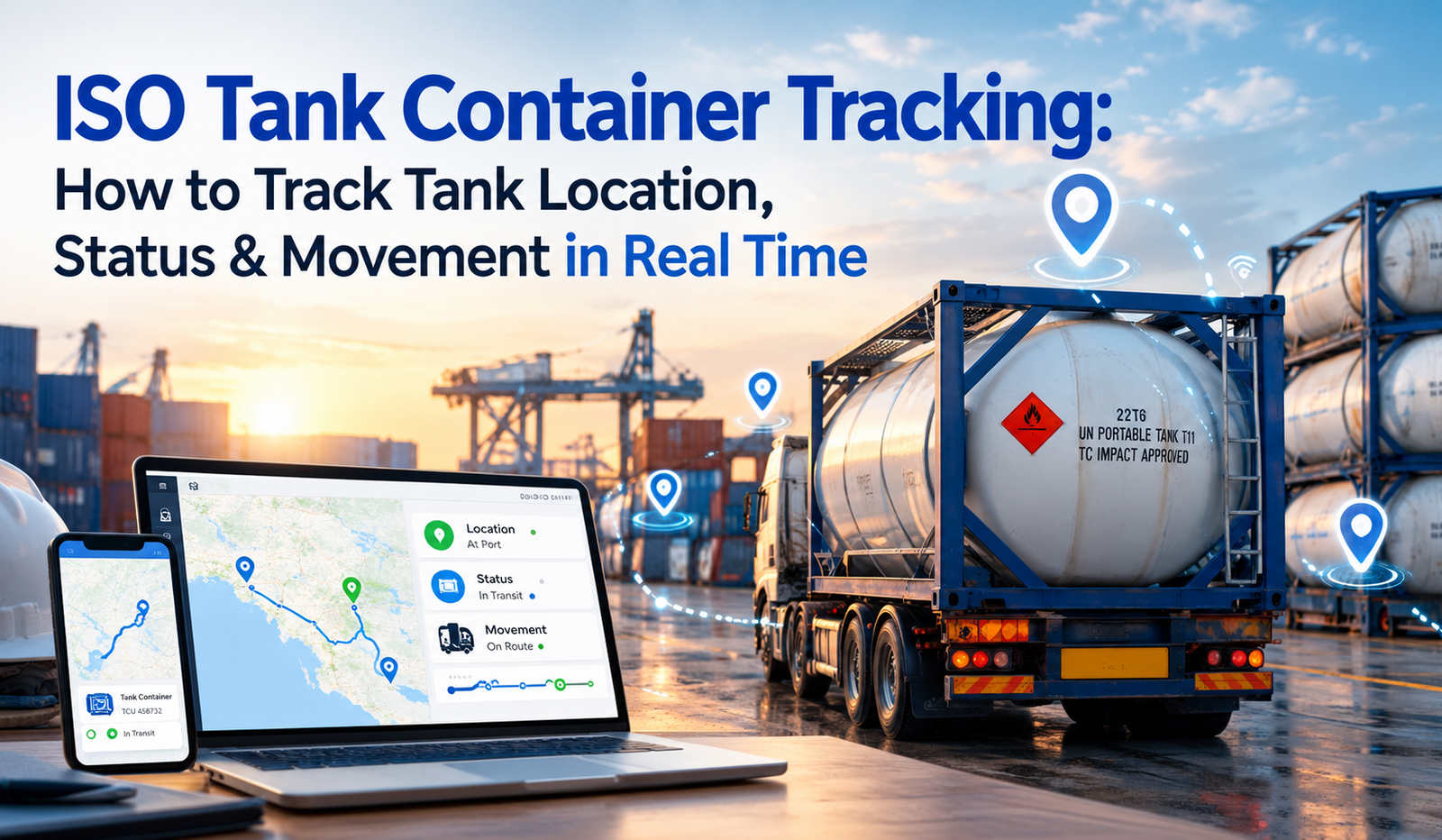
ISO tank container tracking is the process of monitoring an ISO tank’s location, operational status, and movement throughout its logistics lifecycle. A modern ISO tank tracking system can combine GPS or IoT location data with operational events such as gate-in, gate-out, loading, unloading, depot arrival, cleaning, inspection, repair, and release.
For ISO tank operators and chemical logistics companies, effective tracking is not simply about seeing a tank on a map. The real objective is to answer three questions accurately:
Where is the tank? What is its current status? What happened to it before it reached this point?
By combining real-time location visibility, standardized status updates, movement history, depot information, and exception alerts, tank container tracking software can help businesses improve fleet visibility, reduce manual follow-ups, manage tanks across multiple depots, and make better operational decisions.
What Is ISO Tank Container Tracking?
ISO tank containers move through complex logistics networks involving customers, transporters, ports, terminals, shipping lines, cleaning stations, repair facilities, and depots.
Keeping track of these assets becomes difficult when information is spread across spreadsheets, emails, phone calls, and different systems.
ISO tank container tracking provides a structured way to monitor an individual tank throughout this journey.
Depending on the technology and integrations available, tracking may combine:
- GPS or IoT location information
- Tank identification numbers
- Shipment milestones
- Gate-in and gate-out events
- Loading and unloading status
- Depot arrivals and departures
- Cleaning and inspection records
- Maintenance or repair status
- Customer delivery information
- Historical tank movements
A complete ISO tank tracking system therefore goes beyond displaying a location pin. It creates an operational record of where the tank is, what is happening to it, and where it needs to go next.
Why Is ISO Tank Tracking More Complex Than Basic Shipment Tracking?
A shipment typically has a defined origin and destination.
An ISO tank, however, continues to exist as an operational asset after the cargo has been delivered.
Consider a simplified lifecycle:
Available → Allocated → Loaded → In Transit → Delivered → Empty → Depot → Cleaning → Inspection → Repair if Required → Released → Available
The same tank may then be assigned to another customer and begin a completely new journey.
For this reason, businesses need to track both the shipment and the physical tank asset.
This distinction is particularly important for tank operators managing hundreds or thousands of units across different customers, routes, countries, and depots.
What Information Should Be Tracked for an ISO Tank?
Effective ISO tank movement tracking requires more than a tank number and current location.
The exact information required depends on the operator and workflow, but several data categories are particularly valuable.
- Tank Identification
Every asset should have a reliable digital record containing relevant identification information.
This may include:
- Tank/container number
- Equipment type
- Capacity
- Ownership or lease information
- Technical specifications
- Relevant certificates
- Current availability
This becomes the master record against which operational events can be associated.
- Current Location
The system should provide the best available information about where the tank is currently located.
Depending on the tracking infrastructure, this might include:
- GPS coordinates
- Port or terminal
- Depot
- Customer location
- Transport leg
- Last reported position
A good system should also make it clear when the location was last updated. A position recorded several hours ago should not automatically be interpreted as a live position.
- Operational Status
Location alone does not explain what is happening to a tank.
Useful statuses may include:
- Available
- Allocated
- Loaded
- In transit
- Delivered
- Empty
- At depot
- Awaiting cleaning
- Under cleaning
- Awaiting inspection
- Under repair
- Released
Standardized statuses allow operations teams to quickly understand asset readiness.
- Movement Events
Every significant transition should be recorded with relevant timestamps.
For example:
Gate-out → Transport → Port arrival → Vessel movement → Destination arrival → Customer delivery → Empty return → Depot gate-in
This creates a reliable chronological history.
- Depot Activity
When the tank reaches a depot, operators may need visibility into:
- Gate-in date and time
- Yard location
- Cleaning status
- Inspection result
- Repair requirement
- Maintenance activity
- Release status
- Gate-out date and time
Connecting these activities to the tank’s tracking record prevents visibility from disappearing once the asset enters a depot.
ISO Tank Location Tracking vs. Status Tracking: What's the Difference?
This distinction is fundamental to effective container tracking.
Location Tracking Answers: “Where Is the Tank?”
Location tracking determines the physical or last-known position of an ISO tank.
For example:
Tank ABCD 123456 is currently at Depot A.
Location information can come from technologies or operational systems such as GPS, IoT devices, geofencing, mobile applications, depot records, and integrated carrier data.
Status Tracking Answers: “What Is Happening to the Tank?”
Status tracking explains the tank’s operational condition or workflow stage.
For example:
Tank ABCD 123456 is at Depot A and awaiting cleaning.
That additional context makes the data much more useful.
A tank sitting at a depot could be:
- Empty and available
- Waiting for cleaning
- Under repair
- Reserved for another shipment
- Waiting for customer instructions
Therefore, real-time ISO tank tracking becomes much more valuable when location and operational status are viewed together.
How Does Real-Time ISO Tank Tracking Work?
There is no single technology behind every tracking platform. Modern systems may combine several data sources.
Step 1: Create a Digital Tank Record
Each ISO tank is registered in the software with its unique identification and relevant asset information.
Step 2: Connect the Tank to an Order or Shipment
When the tank is allocated, the system associates it with a booking, customer, cargo, route, or shipment.
Step 3: Capture Movement Events
Operational events are recorded as the tank moves through the supply chain.
These updates may come from:
- GPS devices
- IoT sensors
- APIs
- Depot systems
- Mobile applications
- Carrier integrations
- Authorized user updates
Step 4: Update Location and Status
The tank container tracking software processes these events and updates the tank’s latest known location and operational status.
Step 5: Display Information Centrally
Operations teams can view tank information through dashboards, maps, lists, or reports.
Instead of checking several systems, users can work from a centralized operational view.
Step 6: Trigger Exceptions or Alerts
Configured rules can flag events requiring attention, such as:
- Unexpected delays
- Route deviations
- Excessive dwell time
- Late depot arrival
- Extended idle periods
- Pending cleaning or repair
- Missed operational milestones
This shifts tracking from simply recording events toward actively managing exceptions.
Tracking ISO Tanks across Multiple Depots
Multi-depot operations introduce another layer of complexity.
A tank might be received at one depot, cleaned at another facility, repaired elsewhere, and eventually released from a third location.
Without centralized tracking, each facility can become a separate information silo.
An effective ISO tank tracking system should maintain one continuous asset record even when the tank changes locations.
For example:
Depot Mumbai → In Transit → Depot Pune → Cleaning → Inspection → Released → Customer
Instead of creating disconnected records at each depot, every movement is attached to the same tank history.
This gives management network-wide visibility into:
- Tanks at each depot
- Available inventory
- Tanks in transit
- Tanks awaiting cleaning
- Tanks under repair
- Tanks ready for allocation
- Inter-depot movements
When integrated with tank depot management software, tracking can continue seamlessly from transportation into yard, cleaning, inspection, repair, and release workflows.
Common ISO Tank Tracking Problems
Even companies that already track their tanks can experience significant visibility problems.
- Outdated Location Information
A tank may appear at its previous location because the latest movement event has not been captured.
Solution
Use automated or integrated data feeds where practical and clearly display the timestamp of the latest update.
- Location without Operational Context
Knowing that a tank is inside a depot does not tell the team whether it is available.
Solution
Combine location data with standardized operational status.
Instead of:
Depot A
show:
Depot A — Cleaning in Progress
- Different Systems across Depots
Separate depot databases create fragmented records.
Solution
Use centralized tank container tracking software or integrate depot systems so that every location contributes to the same asset record.
- Excessive Manual Updates
Repeatedly entering movement information increases workload and creates opportunities for mistakes.
Solution
Integrate tracking devices, depot systems, mobile workflows, APIs, and other available data sources to reduce unnecessary manual entry.
- Missing Movement History
Some systems show only the current status and overwrite previous information.
Solution
Maintain timestamped event history rather than storing only the latest value.
- Inconsistent Status Definitions
One depot may use “ready,” another “released,” and another “available” for similar conditions.
Solution
Establish standardized statuses and workflows across the organization.
- No Exception Management
A tracking platform may display information without identifying which tanks actually require attention.
Solution
Use rules and alerts to surface delays, excessive dwell time, overdue activities, and other operational exceptions.
How Container Tracking Software Solves These Challenges
Modern container tracking software brings information from multiple operational sources into a centralized environment.
Instead of asking:
“Where is this tank?”
and then calling multiple teams to understand its condition, operators can view the asset record directly.
A well-designed system can bring together:
Asset Data
Tank identity, specifications, ownership, and availability.
Location Data
Current or last-known position and update timestamp.
Status Data
Loaded, empty, available, cleaning, repair, or other operational states.
Movement History
Timestamped events from previous journeys and facilities.
Depot Data
Gate movements, yard location, cleaning, inspection, repair, and release.
Shipment Data
Booking, customer, route, origin, destination, and delivery milestones.
Bringing these elements together creates a more complete operational picture.
Benefits of Real-Time ISO Tank Tracking
Better Fleet Visibility
Teams gain a centralized view of where tanks are and what they are doing.
Improved Tank Utilization
Identifying idle or soon-to-be-available tanks helps improve allocation decisions.
Faster Exception Management
Operations teams can identify delays and unusual events earlier.
Reduced Manual Follow-Ups
Centralized information reduces dependence on calls, emails, and spreadsheets for routine status checks.
Better Depot Coordination
Transport and depot teams can work from connected tank information.
More Reliable Customer Updates
Customer-facing teams can provide more informed shipment and tank status information.
Better Historical Analysis
Movement data can reveal dwell-time patterns, recurring delays, and operational bottlenecks.
Scalable Fleet Management
Centralized tracking becomes increasingly valuable as the number of tanks, customers, routes, and depots grows.
How SeaKnots IT Supports ISO Tank Visibility
For ISO tank operators, depot businesses, and liquid logistics companies, tracking is most useful when it connects with the rest of the operation.
SeaKnots IT develops logistics software solutions designed around container and ISO tank workflows.
A connected platform can help organizations bring together:
- ISO tank tracking
- Tank lifecycle management
- Multi-depot visibility
- Container movement records
- Depot operations
- Cleaning and maintenance workflows
- Shipment management
- Customer and vendor information
- Operational reporting
This helps teams move away from fragmented tracking processes toward centralized, data-driven operations.
Looking for Better Visibility Across Your ISO Tank Fleet?
SeaKnots IT can help you connect tank tracking, depot operations, and logistics workflows through one digital platform.
Talk to SeaKnots IT about your ISO tank tracking requirements and request a software demo.
Frequently Asked Questions about ISO Tank Container Tracking
What is ISO tank container tracking?
ISO tank container tracking is the process of monitoring an ISO tank’s location, operational status, and movement history as it travels between customers, transport networks, ports, terminals, and depots.
How can you track the location of an ISO tank?
Depending on the operator and infrastructure, location information may come from GPS or IoT tracking devices, carrier integrations, depot systems, mobile applications, APIs, and recorded logistics events.
What is the difference between ISO tank location and status?
Location tells you where the tank is, while status tells you what is happening to it. For example, a tank’s location may be a particular depot while its status is “awaiting cleaning.”
What is an ISO tank tracking system?
An ISO tank tracking system is software used to centralize tank location, status, movement events, shipment information, depot activity, and historical tracking records.
Can ISO tanks be tracked across multiple depots?
Yes. A centralized system can maintain a continuous asset record as tanks move between different depots, terminals, customers, and transport locations.
Why is movement history important?
Movement history provides a timestamped record of previous tank events. It can help investigate delays, confirm operational milestones, analyze dwell time, and understand asset utilization.
Is GPS enough for ISO tank tracking?
GPS can provide valuable location information, but effective ISO tank management often requires additional operational data such as shipment status, depot activity, cleaning, inspection, maintenance, and tank availability.
How does tank container tracking software improve operations?
It can centralize tank information, reduce manual status checks, improve asset visibility, identify operational exceptions, support better allocation decisions, and improve coordination between logistics and depot teams.